
Records Behind a Big Spring Resident Lookup
There is no single official roll of every Big Spring resident. A careful resident lookup begins by matching the question to the custodian. The Howard County Appraisal District can identify a tax-account owner and parcel details, the election route can confirm registration status where a lawful match is available, and court, vital, historical, or state systems serve other purposes. A name on one record is only a lead until independent details support the match.
| Record | What It Confirms | Where | Access |
|---|---|---|---|
| Property roll | Tax-account owner display, parcel identifiers, legal description, and shown situs or mailing details | Howard County Appraisal District public property search | Public search with 2017–2026 tax-year choices; not title or occupancy proof |
| Voter status | Registration or status routing when the official lookup permits a match | VoteTexas and the Howard County election office | Protected addresses, identifying numbers, and confidentiality-program records are restricted |
| Court files | Party roles, filings, hearings, and disposition clues in unsealed material | Howard County Tyler public portal and Big Spring Municipal Court | Portal inspection was blocked; District Clerk gives a $5-per-name search route |
| Vital records | Eligible event verification or a certified local copy | Texas DSHS Vital Statistics and Howard County Clerk | Recent certificates are restricted; older public-release rules apply |
| Historical sources | Dated address, family, civic, or business connection | Howard County Library, Southwest Collection, Mount Olive lists, and directory reels | Historical lead requiring a date, page, reel, and identity check |
Start with the record that can answer the narrowest question. A CAD entry can provide a parcel trail, but it is not a deed and does not prove who lives there. A voter-status result is not a general directory. A case entry is a court lead, not a statement about every person with the same name. Keeping those limits in the search notes prevents unrelated people from being joined.
Match Names Before a Big Spring Resident Lookup
Howard County’s small population does not remove the same-name problem. Before treating two results as one person, match at least two independent details such as a middle initial, age or event date, spouse or parent, occupation or organization, historical address, parcel ID, or case number. Write down the spelling form that returned each record. A reversed name order, punctuation change, initials, or a prior surname can explain a missed index result.
Use the Howard County Clerk’s Tyler records route for recorded-instrument leads. Its disclaimer describes the index as a finding aid rather than the document. Search both parties and spelling variants, and use a legal-description or subdivision clue after finding one related instrument. A clerk image or certified copy matters when the instrument itself must be evaluated.
| Name variant | Keep the precise spelling, initials, punctuation, and name order that returned a result. |
|---|---|
| Address detail | Label it as mailing, situs, historic, filing, or organizational address rather than treating all addresses alike. |
| Parcel or case key | Preserve a property ID, geographic ID, legal description, or cause number when the source displays one. |
| Source and date | Record the custodian, index date, result date, and whether the evidence is an index, image, or certified copy. |
Commercial compilations can merge similar names or retain old address data. Correct an underlying government record with its custodian and do not use an unverified commercial result as proof of identity or address.
Court Paths for a Big Spring Resident Lookup
The Howard County District Clerk serves the 118th District Court Building and links the Howard County Tyler public portal for civil, family, and criminal searching. The research session encountered a human-verification gate, so field names, result columns, document tabs, and online coverage should be checked directly before relying on them. The office states that civil, family, and criminal searches cost $5 per name, paid before searching by cash or money order, with no debit or credit cards accepted.
Ask for the record class you need: a case search, docket, image, certified copy, or disposition. Give a party name, variant, approximate filing date, case type, and cause number if known. Public-access terminals at the clerk’s office are the fallback when the portal is unavailable; ask whether an older archived case needs a staff search or separate copy request. The County Clerk separately lists probate and civil searches, while district-level civil, family, and criminal matters have their own route. Big Spring Municipal Court handles Class C city-ordinance, environmental, and traffic matters. It has no located public case-search interface, and the city says action requests must be written or made in person.
When an official court result is available, preserve the fields that identify the record rather than a name alone:
- Case number and filing date.
- Court and case type.
- Party names and their stated roles.
- Status or disposition, plus any hearing or order date.
- Whether a linked document is open, redacted, restricted, or available only through the custodian.
- Docket
- A court’s running case record, often showing filings, settings, parties, and status. It is not the complete file.
- Index and image
- An index points to a record. An image is the viewed document itself, which can still be restricted, redacted, or require a custodian request.
- Certified copy
- A copy issued and certified by the office that holds the record. An archive or search result does not replace it.
Juvenile, sealed, expunged, adoption, and restricted family details should not be assumed public. A party name, witness name, attorney name, and address shown in a filing are different roles and should not be combined into a personal profile.
Texas Vital Events in a Resident Lookup
Vital-record access depends on the event and eligibility. For Big Spring events, Howard County Clerk is the local route for certified birth, death, and marriage copies, while DSHS Vital Statistics handles statewide verifications and eligible certificates. Texas birth records become public on their 75th anniversary and death records on their 25th anniversary under Tex. Gov’t Code §552.115. Marriage indexes begin in 1966 and divorce indexes in 1968; older events belong with the county clerk or district clerk.
A verification is not a certified license or decree. For an older household trail, pair an eligible vital route with a dated city directory, obituary, cemetery listing, or newspaper page. For a birth-family search, the lawful route is the Texas DFPS Adoption Registry and any required confidential-intermediary or legal process. Ordinary public indexes do not open sealed adoption files.
Note: Ask a custodian about eligibility, identification, form requirements, and the current fee before ordering a restricted certificate or certified copy.
Custody Records for Big Spring Residents
Custody, booking, court case, conviction, sentence, parole, and registry entry are different events. Howard County Sheriff information is an official starting point, but the research did not locate a separate public jail-roster field interface. The Texas Department of Criminal Justice provides a statewide offender search by name, SID, or current TDCJ number. A partial name can use an asterisk wildcard, and result information may include location, offense, projected release, and notification options.
The TDCJ offender search supplies the official captured search view.
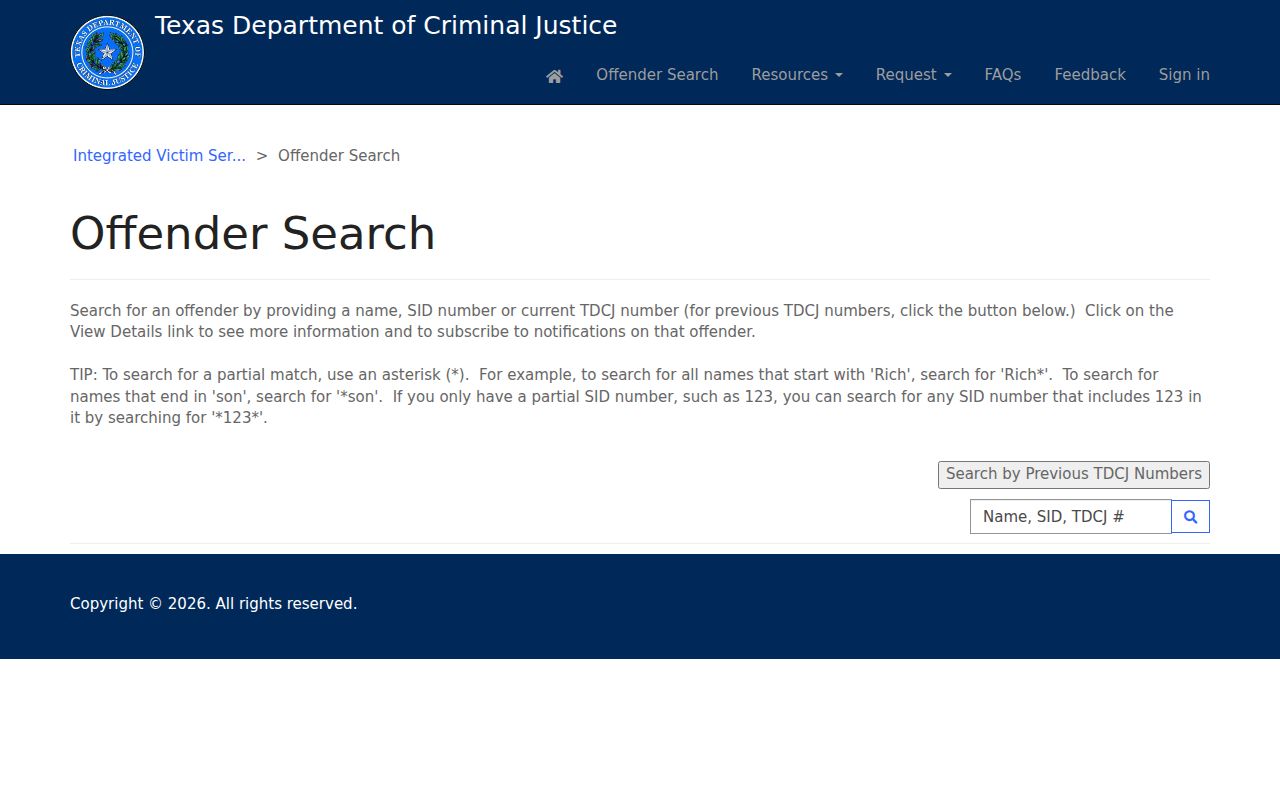
TDCJ status is not a complete incarceration history and does not replace a county docket or a certified court disposition.
Texas DPS also provides criminal-history routes, but it warns that a name search is not positive identification. Fingerprints provide stronger identity matching. Never identify a person from a name hit alone, and never publish victim data, protected addresses, family details, or personal identifiers.
Verify a Big Spring Resident Across Records
Verification is a sequence, not a single search. Anchor the name to a dated record, capture the identifier that the source exposes, and then compare only independent, lawful details. If an online route fails, use the documented custodian channel. The County Clerk and District Clerk portals were affected by human verification during research, so a telephone, written request, counter search, mail, fax, or a Texas Public Information Act request can be the practical next step.
- State the exact question and start with a name variant, historic address, parcel ID, or case number that matches it.
- Search Howard CAD by owner when property is relevant, preserving the property or geographic ID, shown mailing or situs address, tax year, and legal description.
- Compare a second official source, such as VoteTexas for lawful registration-status confirmation, an unsealed court route, or an eligible vital-record process.
- Request an image or certified copy from the actual custodian when the index result controls an estate, family-history, or legal question.
- Keep a dated note of both positive and negative results, naming the custodian and range searched.
The historical part of this process belongs with cataloged pages, newspapers, and cemetery lists. The Big Spring city directory collections explain how to cite those dated sources without treating an old entry as current evidence.
Privacy Boundaries for Big Spring Resident Lookup
Protected omissions are intentional legal boundaries. Texas voter rules restrict Social Security numbers, driver-license and personal-ID numbers, certain telephone and address fields, and confidentiality-program information. The Texas Address Confidentiality Program may give qualifying participants a substitute post-office-box address and mail forwarding. Do not try to crosswalk that substitute to a physical residence or publish a suppressed street address.
The Texas Data Privacy and Security Act gives rights regarding certain private controllers’ data, but it does not erase a county deed, court docket, or lawful public voter field. Motor-vehicle personal data has separate restrictions under federal law and Texas Gov’t Code §552.130. When a value is missing, restricted, or redacted, preserve that limit in the record note instead of attempting to fill the gap from unrelated sources.
Lawful use. Use official records for personal, lawful research. Texas Penal Code §§42.072 and 42.07 prohibit stalking and harassment; do not use records to target, threaten, intimidate, or harm anyone.
When a Big Spring Resident Lookup Hits a Gate
Access friction is a research result, not proof that a record is absent. The Howard County Tyler systems were blocked by human verification during field inspection, and no public municipal-case search was located. Contact the correct office with a narrow request: specify the names, record class, approximate date range, cause number or parcel details, and whether an index search, image, docket, or certified copy is needed. The Texas Public Information Act guidance explains the statewide public-records framework.
Federal cases are separate from county and state systems. PACER is the official federal court records route and has its own account and per-page fee structure. Verify current pricing and the court that covers Howard County before using it. A federal search result should remain separate from a state or local record trail.
The official PACER portal supplies the captured federal-records view.
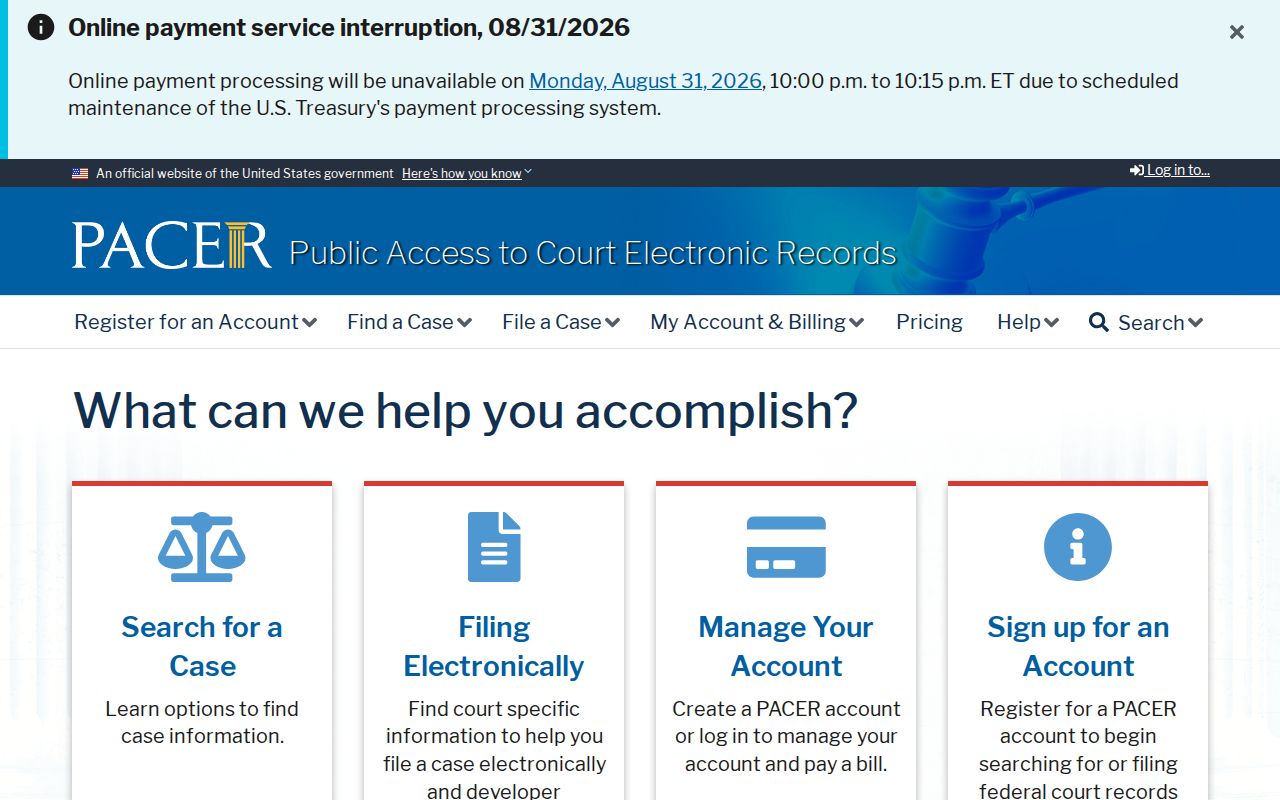
Use each system’s stated custodian and coverage, then record a scoped negative result as “not located in this portal and date range,” not as a claim that no record exists.